Michael Collins plays a crucial role in the establishment of the Irish Free State in the 1920s, but becomes vilified by those hoping to create a completely independent Irish republic.
| Tagline | Ireland, 1916. His Dreams Inspired Hope. His Words Ignited Passion. His Courage Forged A Nation's Destiny. |
| Release Date: | Oct 25, 1996 |
| Genres: | War, Drama, Thriller, History |
| Production Company: | Geffen Pictures, Fís Éireann/Screen Ireland |
| Production Countries: | Ireland, United Kingdom, United States of America |
| Casts: | Liam Neeson, Aidan Quinn, Stephen Rea, Alan Rickman, Julia Roberts, Ian Hart, Brendan Gleeson, Stuart Graham, Sean McGinley, Gerard McSorley, Jonathan Rhys Meyers |
| Status: | Released |
| Budget: | $25000000 |
| Revenue: | 16900000 |
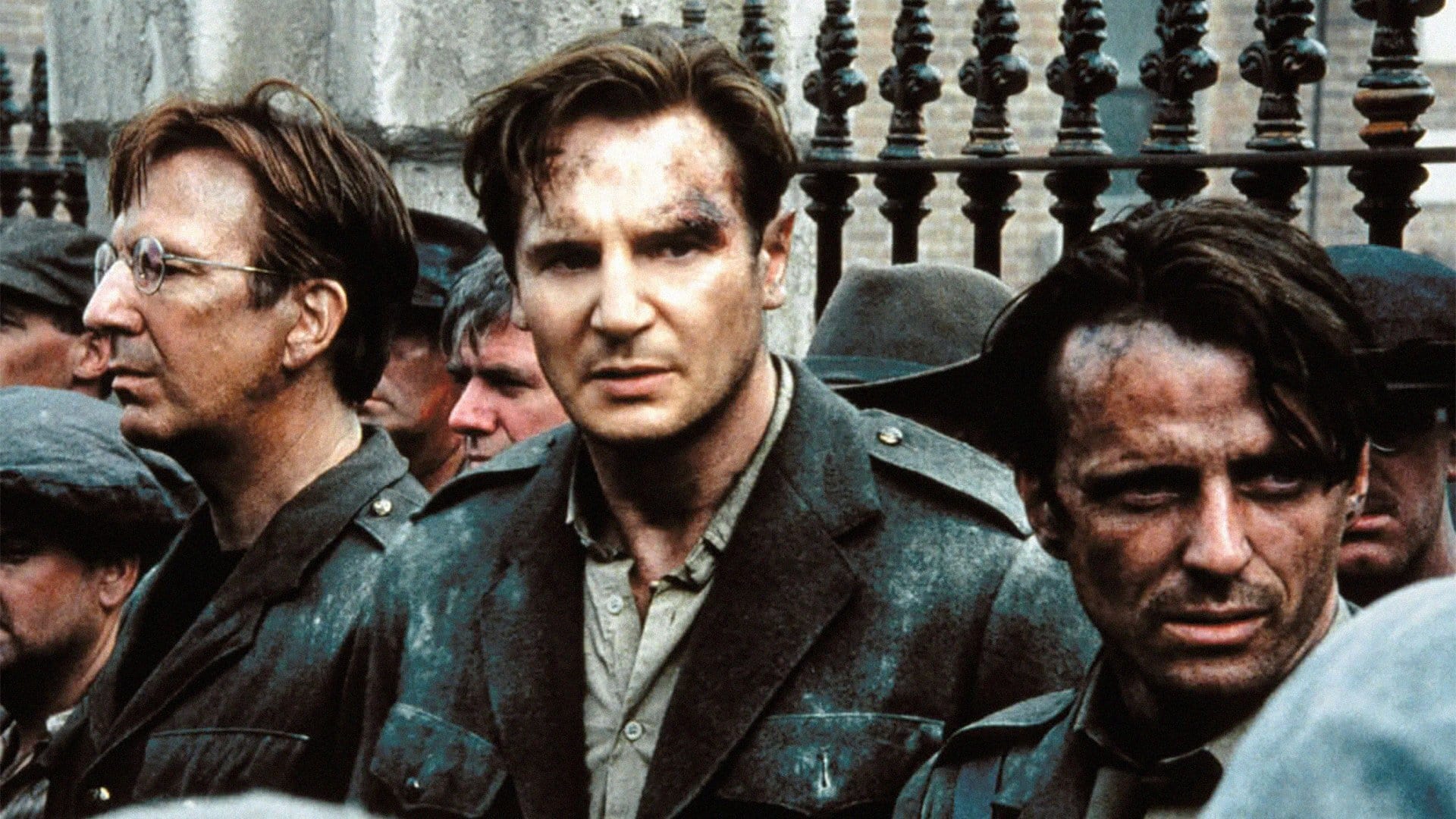
Like many such epics, _Michael Collins_ is melodramatic and partial, about a past all too present. But much of the critical hostility it received/s is for offending popular pieties, imperial or republican, no less prejudiced. Jordan wrestled with historiography and moral complexity in writing his screenplay. He understood that any historical account involves selection and even distortion, not least to persuade producers and sell tickets. Ultimately, however, the period and place are too complex for Jordan to explain or Collins to contain: its violence is too roughly contextualized, its framing too hagiographical, and its characterization of De Valera too broad.
The end of the Great War profoundly changed the dynamic of Irish politics and saw an empowerment of it's independence movement. Back at the start of the 1920s, though, they had little chance against the battle hardened British troops stationed in a nation that was by no means entirely convinced of the merits of a free Ireland. Then along comes the far more subtle Michael Collins (Liam Neeson) who realises that head-to-head battles will only see their numbers eradicated and the collateral damage to the population impact on their cause, too - so he concludes a more strategic plan that targets individuals crucial to the regime. Some are British, some are collaborators - but pretty soon the rising death tolls have forced the government into drastic action, such an wholesale massacre at a football match. It's events like these that turn the tide in his favour and by the early 1920s there are negotiations being held in London. Collins is sent by Eamon de Valera (Alan Rickman) to head up the conversations but the latter man refuses to accept the compromise solution that he is presented with that would create the Free State - a sort of autonomous entity still within the ambit of the Imperial government. By this point, Collins has tired of the relentless cycles of killings and violence, and he has also fallen in love with "Kitty" (Julia Roberts) who just happened to be the girlfriend of his friend "Harry" (Aidan Quinn) who is none too pleased with the result of the peace conference either. What now ensues sees Collins walking on the eggshells of a political scenario that is proving almost as divisive as attitudes to the British themselves, and with the whole Sinn Fein movement turning in on itself, his own life becomes endangered with him surrounded more and more by enemies on all sides. They do say that one man's terrorist is another's freedom fighter, and rarely does a film epitomise that better than in this stylish and complex attempt to explain something of the political situation and it's ebbing and flowing loyalties as those who sought a more softly softly solution for Ireland were ultimately faced down by a visceral section of their own side unwilling to consider anything but full and irrevocable independence. What's also quite well played here is the role of De Valera. Rickman presents us with a character that is both shrewd and passionate, but that is also manipulative and who shows little reluctance to throw Collins under the bus when he decides against participating in the discussions with the British, but instead deputising to this man with little diplomatic experience. It's violent, but I would not say gratuitously so and by the conclusion we know to be fact, it has shown us something of a birth of a nation that was bloody and messy - just like any other birth, and that left scars that (perhaps) only time could heal. Neil Jordan has, of course, taken some theatrical licence with his storytelling and there are speculative elements a-plenty here, but he isn't trying to make a documentary and even if he were, I doubt there could be any more definitive or impartial analysis of Collins's role in the creation of a country to which he was just as devoted as anyone else available. It's a big screen experience if you can for the production is remisicent of one of the grand wartime epics and the story quite compelling, and even if the lacklustre Leeson wouldn't have been my first choice for the title role, this is still an important piece of cinema.

